







Gaza Survives Amid Blockade and Hunger as Israel Restricts 2026
Over 100 days into a fragile ceasefire, Gazans face extreme hunger as Israel blocks critical aid and inflates food costs beyond reach.
January 24, 2026 Hour: 11:17 am
🔗 Comparte este artículo
Gaza survives amid blockade and hunger as Israel allows only 41% of pledged aid, tripling food prices and deepening economic collapse after 100+ days of fragile ceasefire.
Related: Board of Peace ‘Might’ Replace United Nations in Gaza: Trump
Gaza Survives Amid Blockade and Hunger as Israel Restricts Aid
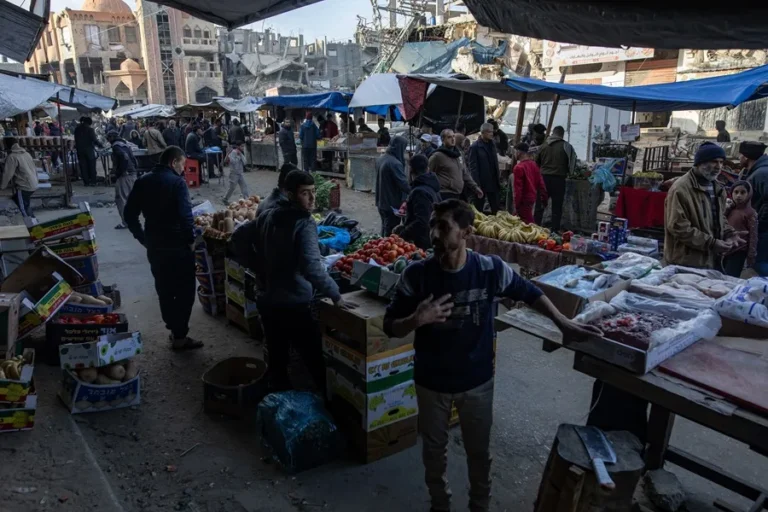
Gaza survives amid blockade and hunger, not because the crisis has ended, but because its people refuse to surrender to engineered starvation. More than 100 days after a fragile ceasefire halted the worst military offensive in decades, the enclave remains trapped in a deliberate economic chokehold—where the return of food to markets is not relief, but a new form of punishment. Basic staples like flour, cooking oil, and milk now cost three to four times their pre-war prices, placing them out of reach for most of Gaza’s 2.3 million residents, many of whom have not received a salary in over two years.
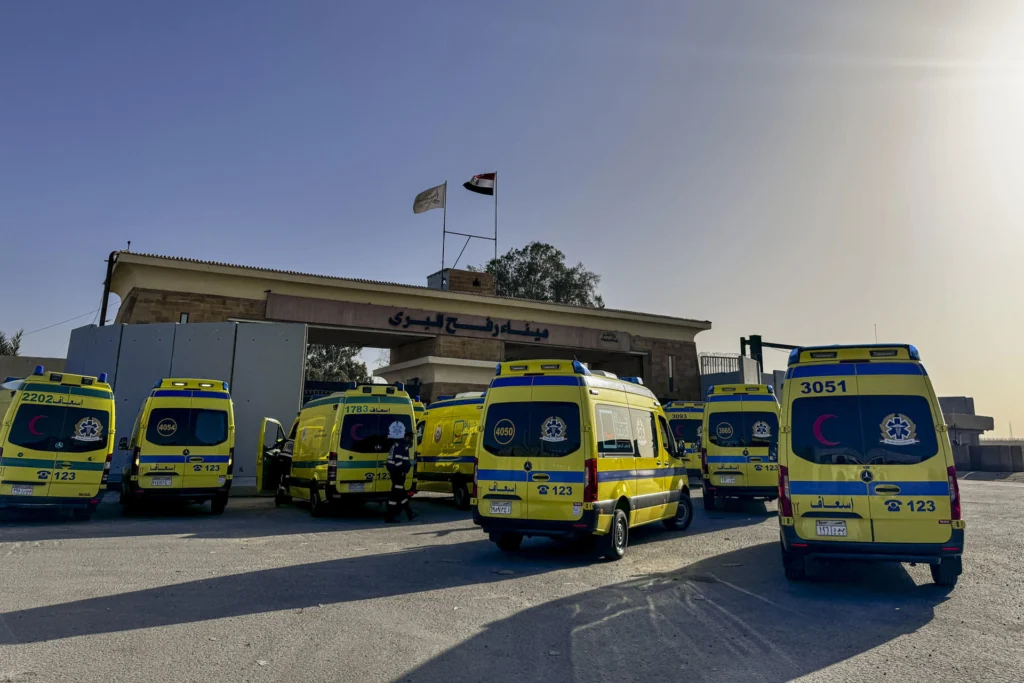
The root of this crisis lies in Israel’s continued restriction of humanitarian access. Despite international agreements, only 41% of the promised daily aid trucks are allowed into Gaza, and the strategic Rafah crossing remains largely closed. This “scarcity by design,” as local economists call it, ensures that even when goods arrive, they are so limited that merchants must charge exorbitant markups to cover inflated import costs and operational risks. Meanwhile, destroyed power infrastructure prevents refrigeration, forcing rapid spoilage of perishables and further driving up prices.
“For us, seeing bread in a store is not hope—it’s a reminder of what we can’t afford,” said Ahmed Al-Masri, a father of five in Khan Younis. “They stopped bombing, but they never stopped starving us.”
Compounding the crisis is a severe liquidity shortage: banks operate sporadically, ATMs are often empty, and when cash is available, Gazans must pay 15% commissions just to withdraw their own money. This financial paralysis leaves even those with savings unable to buy food, medicine, or fuel.
Gaza Survives Amid Blockade and Hunger as Humanitarian Aid Falls Short
The World Food Programme (WFP) recently reported a slight reduction in “extreme famine” conditions—a statistic that masks the grim reality on the ground. While mass starvation may have slowed, chronic malnutrition and food insecurity remain rampant, especially among the 1.9 million displaced Palestinians living in makeshift camps south of the so-called “yellow line”—a buffer zone enforced by Israeli forces.
Families in these zones report receiving aid rations consisting almost exclusively of dry lentils and bulgur, with no sugar, oil, dairy, or protein. “My children cry for milk, but all we get is beans,” said Fatima Zaqout, a mother in Deir al-Balah. “This isn’t nutrition—it’s slow death by neglect.”
The UN Office for the Coordination of Humanitarian Affairs (OCHA) confirms that Israel continues to block essential items under the pretext that “dual-use” materials—like cement, pipes, or even certain medicines—could be diverted for military purposes. Yet this policy extends to basic foodstuffs, with only 250 of the agreed 600 daily aid trucks entering Gaza in recent weeks.
Historic businesses, including beloved local bakeries and pastry shops, have reopened—but serve only a tiny fraction of the population. “We bake kanafeh again, but who can buy it?” asked shop owner Samir Naji in Gaza City. “Our customers are gone—either dead, displaced, or penniless.”
The situation has drawn sharp condemnation from global actors. Palestinian President Mahmoud Abbas denounced the ongoing siege as a “war by other means,” citing over 1,800 civilian deaths since October 2025 due to repeated ceasefire violations. He emphasized that without full border openings and unrestricted aid, any truce is meaningless.
Geopolitical Context: Blockade as a Tool of Permanent Occupation
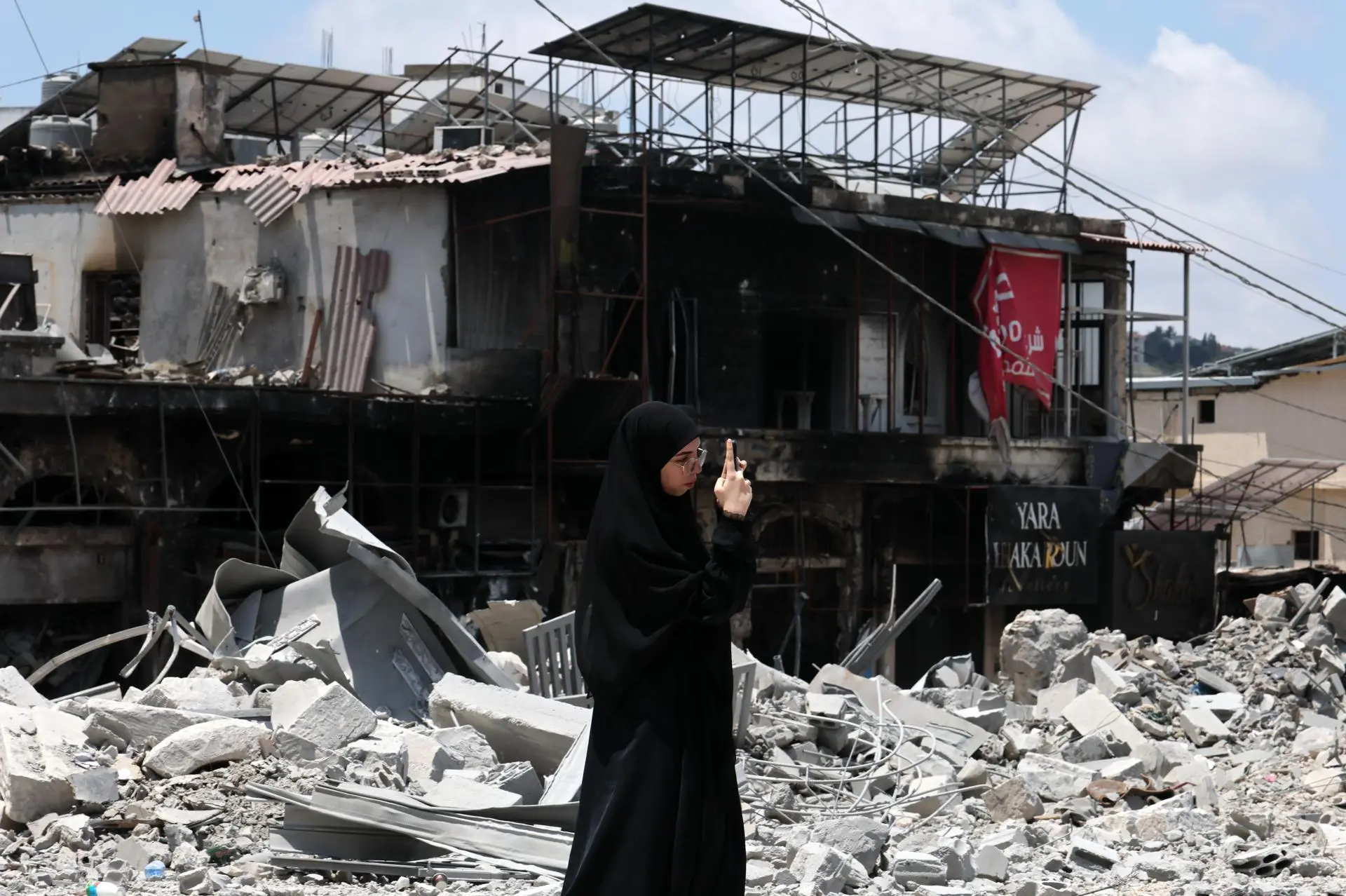
Gaza’s suffering is not accidental—it is structural. The blockade, imposed since 2007, functions as a key instrument of Israel’s occupation policy, designed to fragment Palestinian territory, suppress resistance, and prevent the emergence of a viable state. By controlling every entry point, Israel dictates what enters—and what doesn’t—including construction materials needed to rebuild 71,562 homes destroyed since 2023.
Globally, this strategy reflects a broader trend: the weaponization of humanitarian access. Powerful states increasingly use aid as leverage, conditioning survival on political compliance. In Gaza’s case, the message is clear: submit, or starve.
Yet resistance is growing. Russia has emerged as an unexpected advocate, with President Vladimir Putin proposing to redirect $1 billion of frozen Russian assets—currently held in U.S. banks—to fund Gaza’s reconstruction. Speaking with Abbas during a Moscow summit, Putin framed the move as both humanitarian and strategic: “The creation of a sovereign Palestinian state is the only path to regional stability.”
The proposal, to be channeled through a “Peace Council,” would bypass Western-dominated institutions and directly support housing, schools, and infrastructure. While legal hurdles remain—Washington must agree to release the funds—the initiative signals a shift toward multipolar humanitarianism, where Global South nations seek alternatives to U.S.-led aid frameworks.
Critically, Putin stressed that using these funds does not mean relinquishing Russia’s legal claim to the full $300 billion in frozen assets—a stance that positions Moscow as a defender of sovereign financial rights against unilateral sanctions.
A Diplomatic Gambit for Reconstruction and Sovereignty
The Russian plan will be discussed in detail with U.S. envoys Steve Witkoff and Jared Kushner, who recently visited Moscow to address global security issues. Putin has ordered his Foreign Ministry to consult with strategic partners—including China, Iran, and Arab states—to build a legal mechanism for the transfer, framing it as a challenge to Western financial hegemony.
For Palestinians, the offer represents more than money—it’s recognition. “For decades, the world spoke of peace while letting us die,” said Abbas. “Now, someone offers concrete action—not just words.”
Yet Gazans remain skeptical. Past promises of reconstruction have evaporated amid renewed bombardments and bureaucratic delays. “We’ve heard ‘help is coming’ for 17 years,” said teacher Leila Hamdan. “Until the borders open and the siege ends, no amount of money will bring back our dignity.”
Still, the mere existence of such a proposal shifts the narrative. It exposes the failure of traditional diplomacy and highlights the rise of alternative alliances willing to defy U.S. and Israeli obstruction. In this light, Russia’s move is not charity—it’s solidarity as geopolitical strategy.
Conclusion: Survival Is Not Surrender
Gaza survives amid blockade and hunger—not through aid, but through sheer will. Every meal shared, every child fed, every market stall reopened is an act of defiance against a system designed to erase them.
As Putin’s proposal circulates in diplomatic corridors, Gazans continue their daily battle: queuing for water, bartering clothes for bread, burying the dead with empty hands. Their resilience is not a reason for the world to look away—it is a demand for justice.
Until the Rafah crossing opens fully, until the siege lifts, until sovereignty is restored, survival itself remains the most powerful form of resistance.
Author: JMVR
Source: Agencias